Everyday chemistry, decoded.
Check chemical compatibility, understand everyday ingredients, and calculate safer dilutions—with sources you can verify.
Can I mix these?
warning
Safety disclaimer: Compatibility results are for guidance only. Always read product labels and work in ventilated areas.
If exposure has already occurred, move to fresh air and contact local emergency or poison-control services.
Mix Check
Verify if two chemicals can be safely combined or stored together.
Start check arrow_forwardMaterial Compatibility
See how chemicals interact with plastics, metals, and fabrics.
View charts arrow_forwardDilution Calculator
Calculate exact ratios for safe cleaning and laboratory solutions.
Open calculator arrow_forwardPopular safety questions
Popular calculators
Dilution Calculator
Calculate stock volume for a label-directed target concentration and final volume.
Molar Mass
Parse chemical formulas, parentheses and hydrates to calculate molar mass.
PPM Converter
Convert ppm, ppb, percent, mg/L and g/L with explicit density.
Molarity
Calculate molarity from moles or mass, or find required mass.
Browse everyday chemicals
Sodium Hypochlorite
NaClOActive ingredient in household bleach.
Acetic Acid
CH₃COOHPrimary component of white vinegar (diluted).
Hydrogen Peroxide
H₂O₂Common disinfectant and bleaching agent.
Ammonia
NH₃Powerful cleaning agent and degreaser.
Sodium Bicarbonate
NaHCO₃Baking soda; gentle abrasive and deodorizer.
Isopropyl Alcohol
C₃H₈ORubbing alcohol; solvent and disinfectant.
Built on sources you can verify
We don't guess with chemistry. Our databases pull directly from established scientific authorities.
Source-backed
PubChem, NIOSH, & EPA data
Expert reviewed
Verified by chemists
Updated regularly
Current CIAAW standards
Latest guides
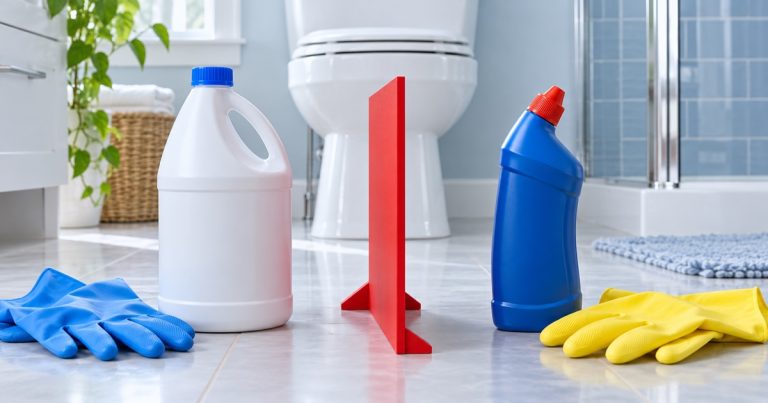
Can You Mix Bleach and Toilet Bowl Cleaner?
Do not mix bleach and toilet bowl cleaner. Compare two real US product documents, identify acid or bleach formulas, and know what…
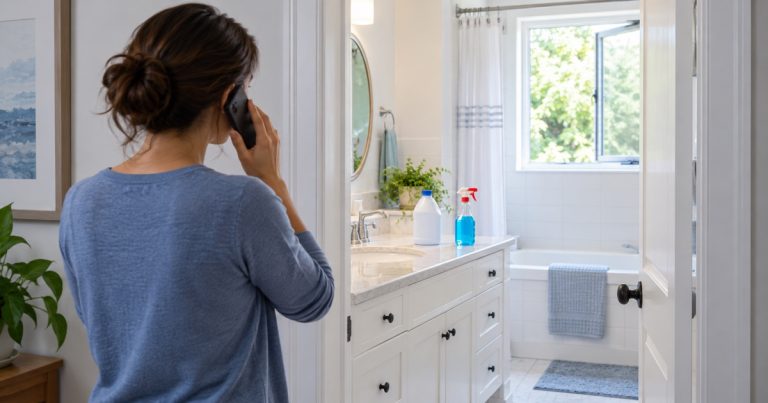
Mixed Cleaning Products? Act Now
Leave fumes, recognize emergency signs, and get poison advice. Find eye and skin first-aid guidance and a practical checklist for the call.
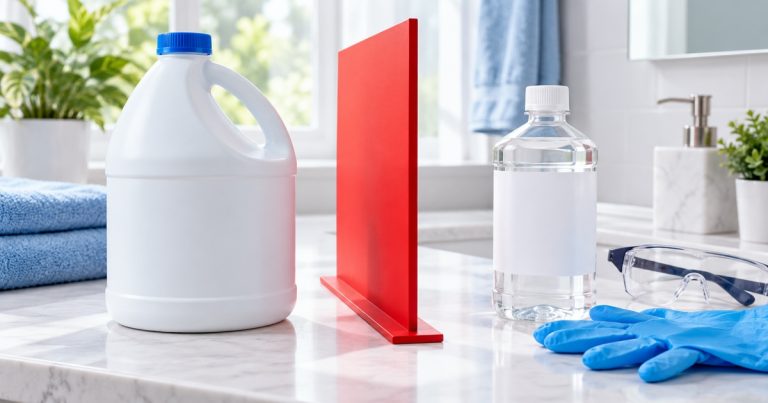
Bleach and Rubbing Alcohol: Never Mix
Learn why bleach and rubbing alcohol must not mix, how to recognize isopropanol, and why layering disinfectants or changing percentages is unsafe.