Evidence-based guide
Bleach and Rubbing Alcohol: Never Mix
Never mix bleach and rubbing alcohol. Hazardous byproducts can form. Already mixed them? Move to fresh air; do not add another chemical.
Breathing trouble, collapse, seizure, or cannot wake? Call emergency services now (US: 911). For US poison advice: 1-800-222-1222. Elsewhere, use your local poison service.
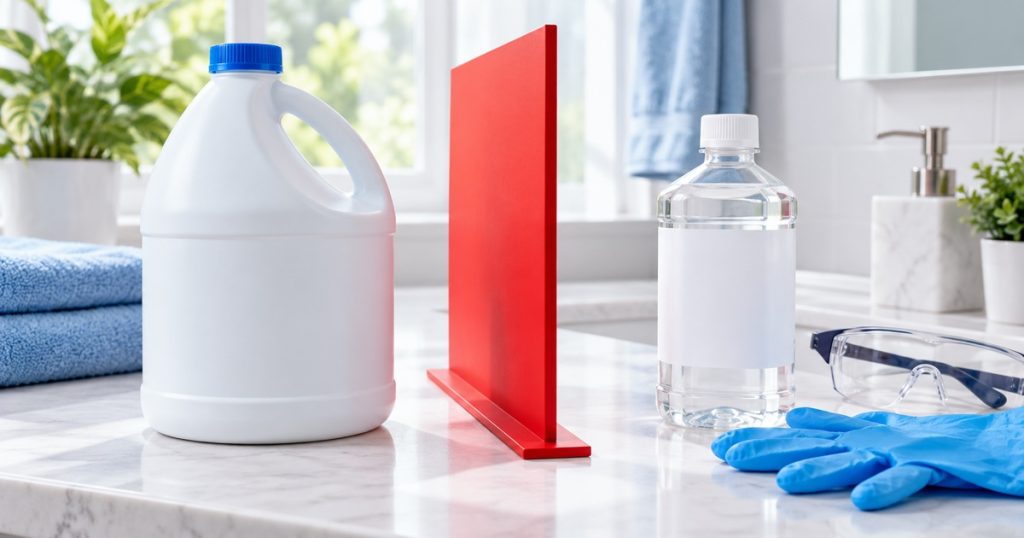
Using two disinfectants together does not combine their benefits. Each product’s instructions apply to its tested formulation—not an improvised mixture or a surface still wet with another product.
Read the alcohol name, not just the percentage
These are educational examples of label wording, not recommendations for a particular product:
- “Isopropyl alcohol,” “isopropanol,” or “2-propanol”: names for the same chemical. NIOSH also lists IPA as a synonym.
- “70%” or “91%”: the concentration on a bottle does not establish that it can be combined with bleach. Neither label is permission to mix.
- “Alcohol-based” wipe or sanitizer: check the actual ingredient and intended use. A skin product is not automatically suitable for a household surface, and an alcohol product should not be combined with bleach.
NIOSH’s isopropyl alcohol entry identifies flammability and incompatibility with strong oxidizers. Keep alcohol products away from ignition sources and follow their labels.
The practical risk: layering disinfectants
A counter has just been wiped with an alcohol disinfectant. Spraying bleach over the wet surface creates contact between products, even without a mixing bottle. The same problem can occur in a reused spray bottle or on a wet cloth.
A better decision: choose one disinfectant labeled for the surface and follow its required preparation, wet-contact time, ventilation, and rinsing instructions. Do not add a second product to “boost” it. If switching products, do not assume that a dry-looking surface or a particular number of minutes proves compatibility; check both labels or ask the manufacturer.
Alcohol versus bleach: choose a product, not a combination
- An alcohol-based product
- Check whether it is intended for hands, a household surface, or another use. Read material restrictions and any disinfection directions. Its alcohol name and percentage alone do not establish the product’s approved uses.
- A bleach-based product
- Check the exact formulation and whether the label calls for dilution or ready-to-use application. A toilet cleaner, laundry bleach, and surface disinfectant are not interchangeable simply because they contain hypochlorite.
The useful comparison is whether a particular label fits your task and surface—not which chemical sounds stronger. Do not copy a contact time from one product onto another. CDC bleach guidance emphasizes the manufacturer’s directions.
Does ethanol change the no-mixing rule?
No. Ethanol, also called ethyl alcohol, is different from isopropyl alcohol, but that difference is not permission to combine it with bleach. Transport Canada’s household-mixing guidance includes ethanol among alcohol-based products of concern. Read the complete product identity rather than assuming that only bottles named “rubbing alcohol” matter.
Why chloroform is mentioned
The ATSDR Toxicological Profile for Chloroform describes chloroform formation when bleach is mixed with common household chemicals such as isopropyl alcohol. Real products are mixtures, and conditions can produce different byproducts and exposure levels.
This does not mean that every accidental contact produces the same dose, nor can a website estimate that dose. Smell, color, and a single reaction equation cannot determine whether a room is safe. This guide intentionally does not provide reaction amounts or a procedure.
Already combined the products?
Leave the exposure area. Do not smell-test, neutralize, or begin cleanup before getting appropriate advice. If you have a label photo already, keep it for the poison specialist; do not re-enter to fetch one. Use the accidental-mixing action guide for a call checklist and exposure first aid.
Can I use bleach with hand sanitizer instead?
No. Changing the alcohol product does not make bleach mixing appropriate. The CDC’s rule is to never mix bleach or disinfectants with other cleaners or disinfectants. Use each product only for its labeled purpose.
Next: Return to the household cleaning hub or compare the distinct hazards of bleach with ammonia and bleach with toilet cleaner.
Additional help and scope
Poison Control’s immediate-assistance guidance explains when to call emergency services. Its online tool does not cover simultaneous exposures to multiple products; call for those incidents.