Evidence-based guide
Mixed Cleaning Products? Act Now
1. Leave fumes and get to fresh air. Do not add anything.
2. Trouble breathing, collapse, seizure, or cannot wake? Call emergency services now (US: 911).
3. Otherwise, get poison advice now. US: 1-800-222-1222. Outside the US: your local poison service. Do not wait to identify the reaction.
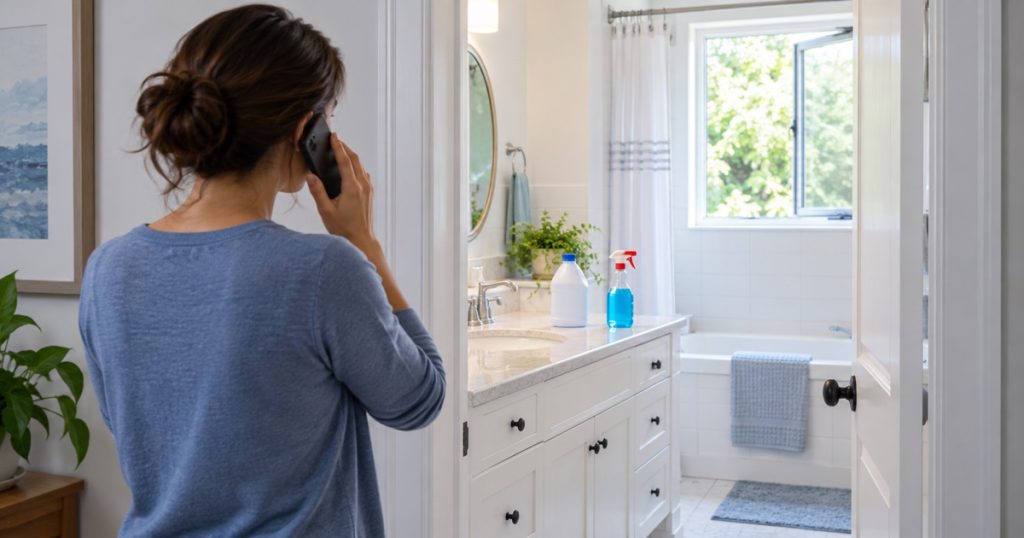
If this is happening now, act on the steps above before reading further. A website cannot measure the exposure or clear a room for re-entry. Do not go back into fumes to rescue belongings, open windows, or retrieve a product label; tell emergency responders if anyone remains inside.
Did liquid reach the eyes or skin?
Once away from fumes, begin appropriate first aid promptly. Have someone call for help while rinsing when possible. Poison Control’s first-aid guidance recommends:
- Eyes: immediately rinse with plenty of room-temperature running water for 15–20 minutes. Remove contact lenses. Do not put another chemical into the eye.
- Skin: remove contaminated clothing and rinse with plenty of room-temperature running water for at least 15 minutes.
Get poison-center guidance for the specific products and symptoms. Severe symptoms need emergency services; do not postpone an emergency call until rinsing is finished. If something was swallowed, do not induce vomiting; call for product-specific instructions.
What to tell the poison specialist
Use the information you already have. Unknown answers are okay; do not delay the call or re-enter the area to complete this checklist.
- Who: the person’s age and approximate weight, if known.
- Products: exact names and variants; ingredient or concentration information only if already available.
- Event: when it happened, what contacted what, and approximate amounts if known—do not measure the mixture.
- Exposure: breathed fumes, eye splash, skin contact, or swallowing.
- Symptoms: what is happening now, and whether it is changing.
- Actions: whether the person is in fresh air and what first aid has begun.
A useful opening is: “Two cleaning products were accidentally combined at about [time]. The person is now [location away from fumes] and has [symptoms]. I know the products as [names, or unknown].” A label photo already on your phone can help, but getting one is not a reason to return.
Why call instead of using a symptom checker?
In the US, Poison Control is available at 1-800-222-1222. Its online tool is not designed for simultaneous exposures to multiple products. Outside the US, use your local poison center or emergency service. Do not use our contact form for urgent help.
What not to do while waiting for instructions
- Do not add vinegar, baking soda, bleach, or another cleaner to “neutralize” the mixture.
- Do not lean over the container, deliberately smell it, or stir it to investigate.
- Do not assume that an absent smell, a dry surface, or elapsed time means safe re-entry.
- Do not start flushing, draining, moving, or disposing of the mixture without incident-specific advice.
Who decides when cleanup is safe?
Follow the poison specialist’s or emergency responder’s directions. The exact products, amount, room conditions, symptoms, and ongoing sources matter. This page cannot provide a universal ventilation duration, waiting time, disposal method, or permission to re-enter.
Two questions after leaving the area
I feel okay now. Should I still ask for advice?
Yes—ask a poison specialist about the actual products and exposure instead of treating an absence of symptoms as clearance. Some effects of chlorine inhalation can be delayed, as described in CDC/NIOSH guidance. That does not mean every mixture causes an injury; it means a website cannot decide from “I feel fine” alone. Do not wait for symptoms to appear before seeking advice.
Who can tell me it is safe to go back?
A poison specialist or emergency responder can advise on the particular incident and whether on-site help is needed. Tell them about any ongoing source, such as a container of mixed liquid or an automatic toilet product, if already known. Do not enter to investigate. A symptom-free person, a disappeared odor, or a fixed number of minutes cannot by itself establish room safety.
After the urgent situation is resolved
Use the cleaning preparation checklist to prevent a repeat. If you want to understand the products involved, read the guides to bleach and ammonia, bleach and rubbing alcohol, and bleach and toilet bowl cleaner. These explanations must not delay getting help.