Evidence-based guide
HDPE Temporary Ground Protection Mats: How to Choose an Access Route
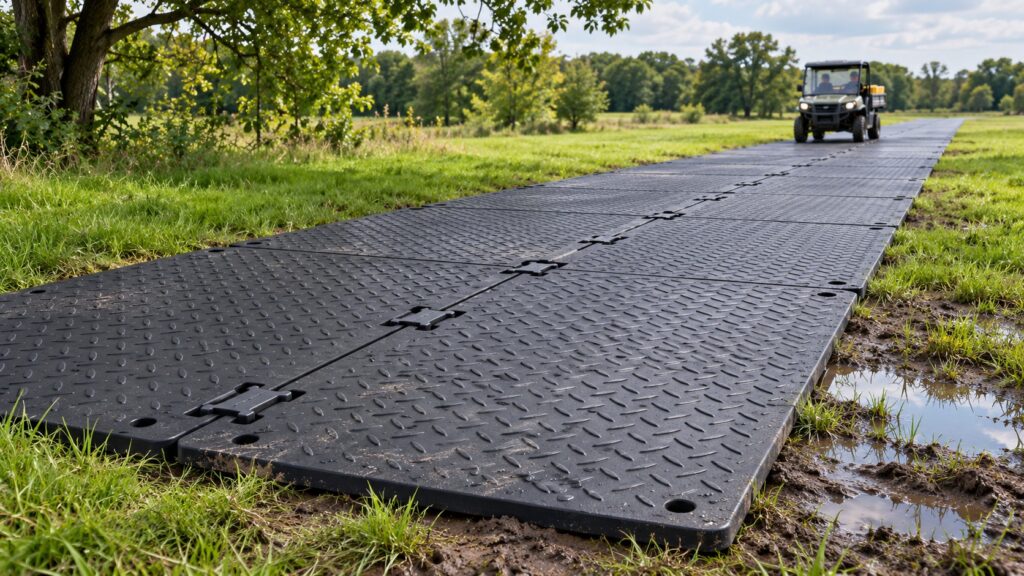
HDPE temporary ground protection mats create a removable working surface over soil, grass, sand, gravel, or other vulnerable ground. They are often called access mats, temporary roadway mats, or bog mats. The panel does not turn weak soil into a permanent road. Its job is to spread wheel or track loads, reduce rutting, and give crews a more predictable route while a project is underway.
What HDPE contributes
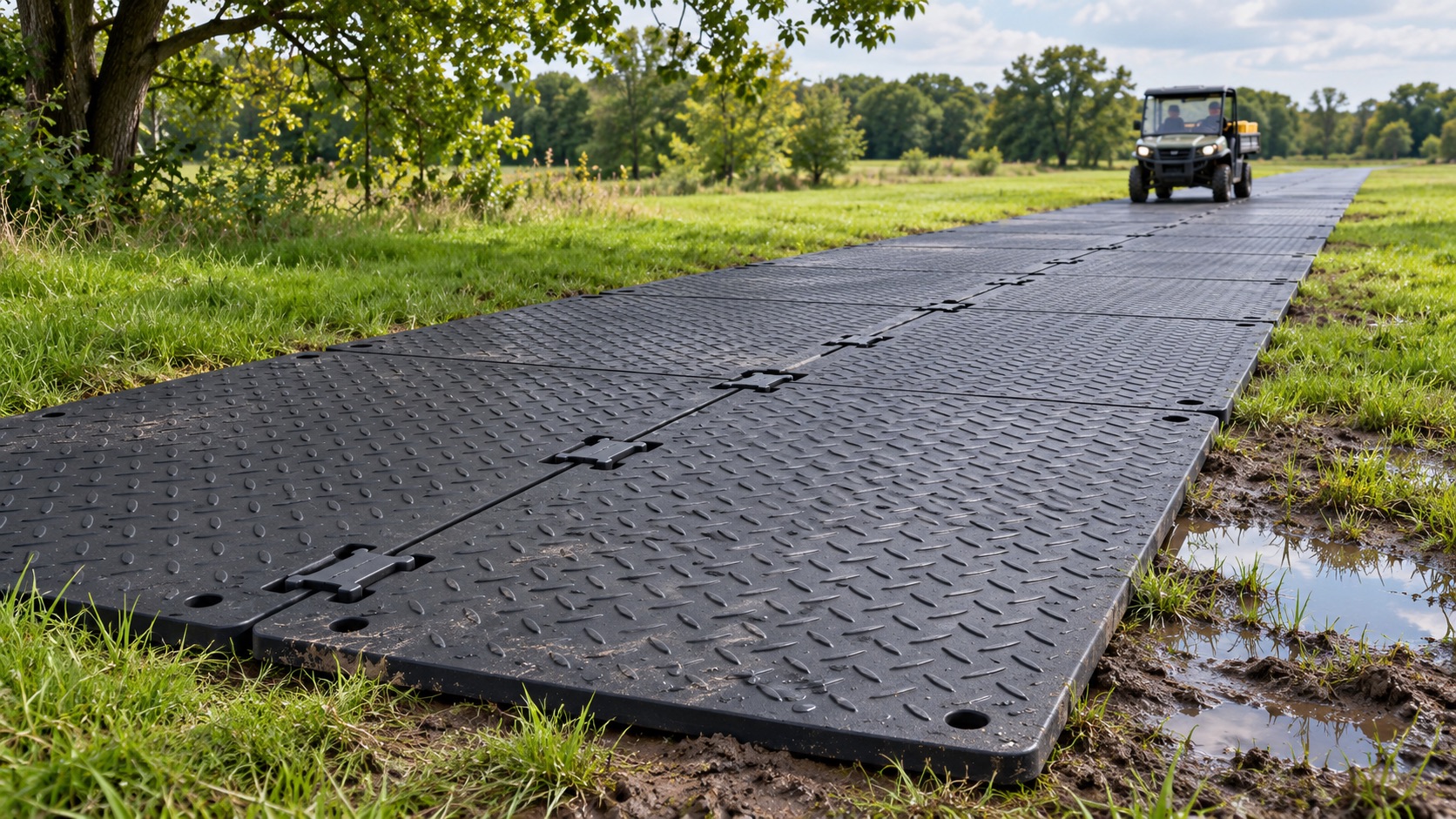
High-density polyethylene is a tough thermoplastic that does not rust and does not absorb water like untreated timber. A mat can flex slightly as a vehicle passes, which helps it follow small changes in the surface. The useful performance comes from the whole system, however: polymer grade, panel thickness, tread pattern, connector design, ground conditions, and the vehicle all matter. A product name alone is not a load calculation.
HDPE is also a practical choice when panels must be cleaned and moved between jobs. Before reuse, inspect the edges, holes, underside, and connector points. Cracks, severe gouges, or distorted locking areas can change how a load is transferred from one panel to the next.
Start with the ground, not the catalog
Walk the proposed route and record the surface at its weakest points. Note saturated soil, buried utilities, drainage paths, steep transitions, soft shoulders, sharp stones, and places where vehicles will turn. A straight path over firm soil may need a different system from a turning area over saturated ground. If the base cannot support the expected load, a mat can bridge the surface temporarily while the underlying soil still settles or fails.
Clear large stones, branches, scrap metal, and other point loads before laying panels. On very soft or wet ground, the project may need a geotextile, compacted aggregate, a thicker panel, a second layer, or a different access design. That decision belongs to the site engineer or competent person responsible for the route.
Match thickness and layout to the traffic
List the heaviest vehicle, axle configuration, turning movement, and expected number of passes. A light pedestrian route, a pickup crossing a lawn, and a tracked excavator making repeated turns do not impose the same demand. Ask the supplier for the test basis behind any published load figure and check whether it assumes a firm aggregate base, a particular span, or a static load.
Panel dimensions affect both coverage and handling. Longer panels can reduce seams on a straight access lane, while smaller panels may be easier to place around trees, drains, or tight corners. Leave enough width for the vehicle and a margin for steering error. On slopes or high-turning areas, use the connector system specified for that condition; a loose panel is a trip hazard and can move under braking or cornering.
What to verify before buying
- Material and thickness: confirm the polymer, nominal thickness, and manufacturing tolerances.
- Surface pattern: choose a tread that balances traction, cleaning, and the needs of wheeled or tracked equipment.
- Connectors: check how panels join, what tools are required, and whether replacement hardware is available.
- Load evidence: request the test method, supporting base, load type, and safety limits instead of relying on a single headline number.
- Handling: confirm panel weight, lifting points, storage space, and the number of workers needed for installation.
- End of use: ask how the product should be cleaned, inspected, repaired, and recycled.
Using a supplier page correctly
A product page can be a useful starting point for dimensions, available colors, connector options, and sample requests. For example, QIVOC’s HDPE temporary ground protection mats page describes customizable panel sizes and thicknesses, raised surfaces, galvanized quick connectors, and applications ranging from construction access to events and landscaping. Treat those statements as manufacturer information to verify against the project specification, not as an independent certification or a substitute for a site-specific design.
A short field checklist
Before the first vehicle enters, mark the route, confirm the base is prepared, interlock the panels, secure edges where movement is possible, and walk the surface. After the first loaded pass, inspect seams and soft spots. During the project, keep a simple log of damaged panels, unusual movement, standing water, and changes in traffic. At demobilization, clean soil from the panels and separate cracked or damaged pieces before the next deployment.
HDPE temporary ground protection mats work best when they are treated as part of an access system rather than as a universal load-bearing promise. Match the panels to the ground, traffic, layout, and inspection plan, and keep the supplier’s test conditions attached to the purchase record.